
Good cleaning advice should help you decide what to clean, which order to follow, which tool fits the surface, and when a job needs more than routine maintenance. This cleaning-tips hub organizes Tidy Upped’s practical guides by room, surface, household concern, and service decision.
Use the quick-start routine below for an ordinary reset, then jump to the detailed guide that matches the problem in front of you.
A simple whole-home cleaning order
- Remove obvious clutter. Put away loose items so you can reach the surfaces that need cleaning.
- Start high. Dust fans, shelves, ledges, fixtures, and other elevated surfaces before floors.
- Work dry before wet. Vacuum, dust, or sweep loose soil before applying liquid cleaner.
- Clean cleaner areas before dirtier areas. Use separate cloths for kitchens, bathrooms, and general spaces.
- Follow product dwell time. Give cleaners time to work, but never let a product dry when the label says to rinse or wipe it.
- Finish with floors. Vacuum or mop your way out of the room.
- Reset tools. Wash cloths and mop pads, empty the vacuum when needed, and let equipment dry.
If the home has significant buildup, start with how often to deep clean a house and compare the condition with the maintenance routine you can realistically sustain.
Room-by-room cleaning checklists
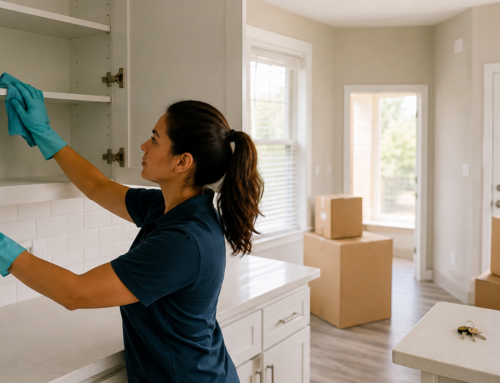
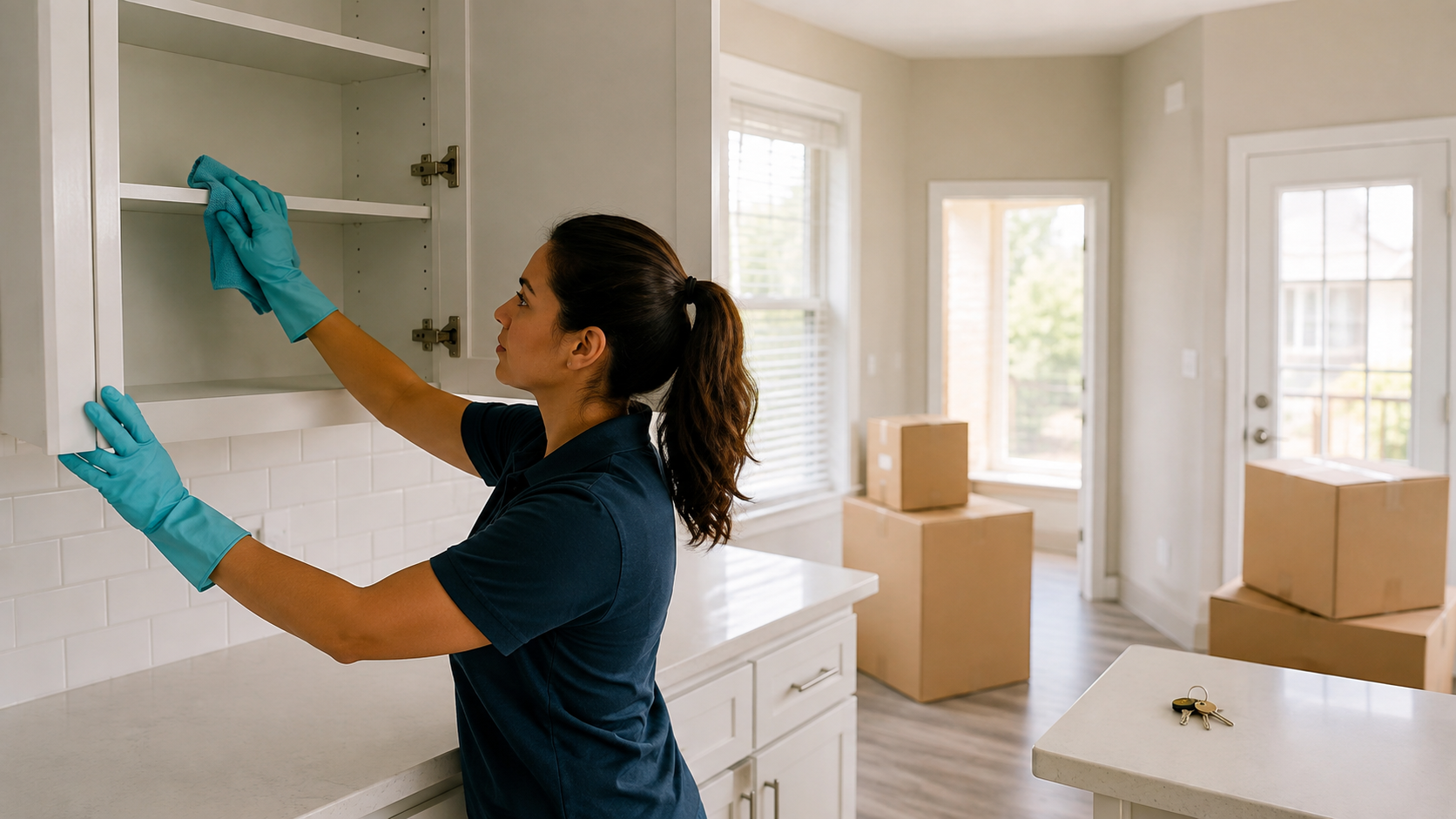
If the property is being emptied for a lease handoff, use the move-out cleaning checklist for renters for vacancy, access, appliance, and final-walkthrough steps.
Bedrooms and multipurpose rooms
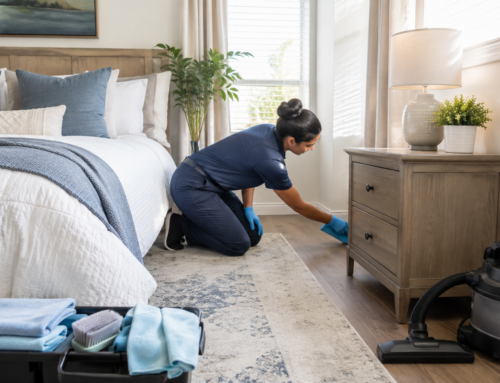
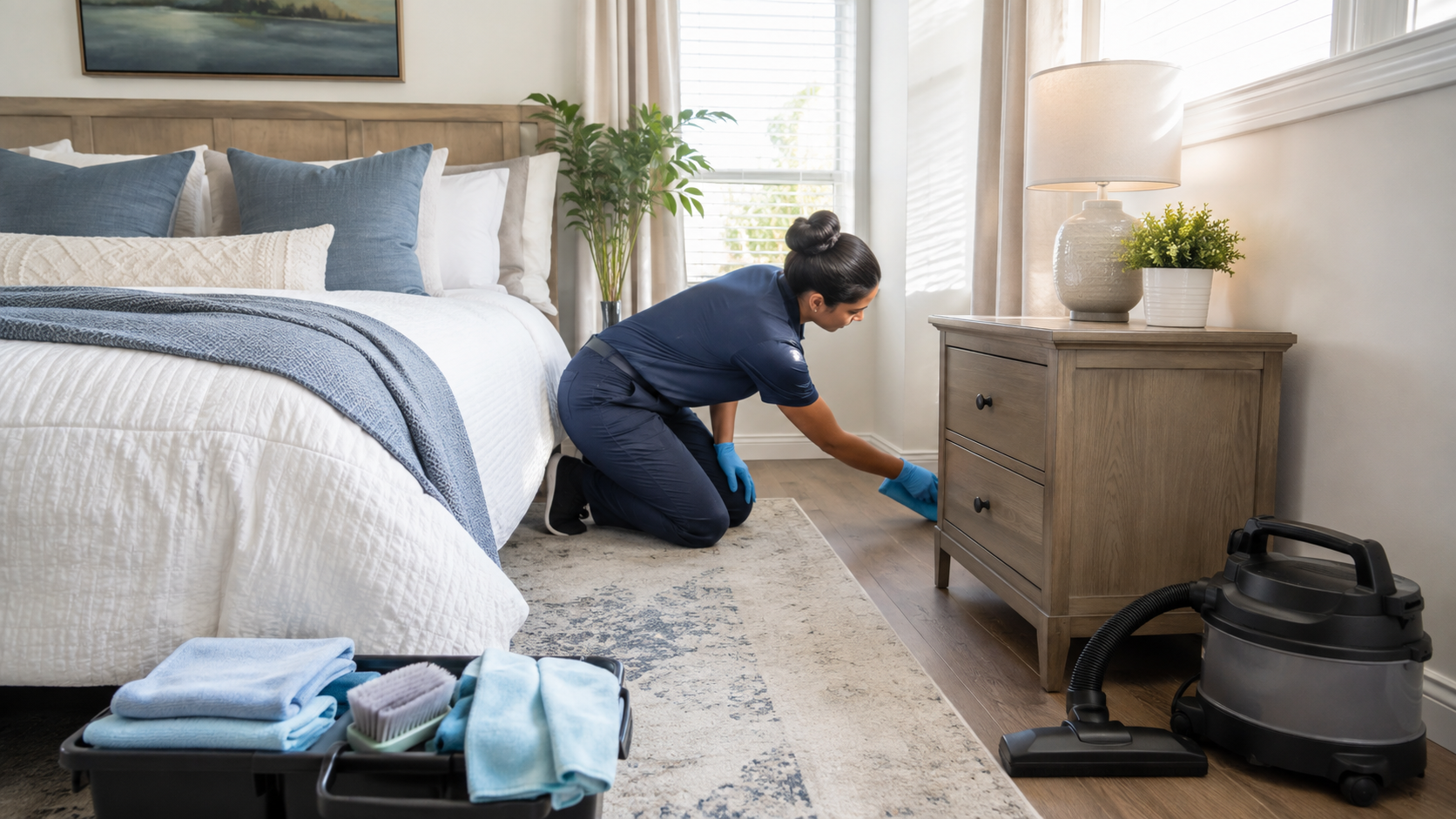
The room cleaning checklist covers decluttering, dusting, bed linens, surfaces, and floors in an order that prevents rework. It is a useful starting point for bedrooms, guest rooms, and home offices.
Bathrooms
Use the bathroom cleaning checklist for a complete reset. For problem areas, see the guides to cleaning a toilet correctly, bathtub cleaning, and cleaning grout with less scrubbing.
Living rooms
The living room checklist organizes dusting, electronics, soft furnishings, traffic areas, and finishing details. If upholstery is the main concern, read how to clean a couch before applying moisture or product to an unknown fabric.
Kitchens
For appliance details, follow the step-by-step guides for cleaning a microwave and keeping a garbage disposal clean and odor-free. Always check manufacturer directions and surface compatibility before using DIY mixtures.
Surface-specific cleaning tips
Quartz countertops
Quartz is durable but not indestructible. The quartz countertop care guide explains daily cleaning, stain response, products to avoid, and why harsh abrasives can dull the finish.
Porcelain tile and grout
Start with the porcelain tile guide for floors, showers, and grout. Match the product to the tile and grout condition, and remove loose grit before wet cleaning.
Carpet
Vacuuming removes loose dry soil; professional or machine-based cleaning addresses soil held deeper in the fibers. Compare the methods in carpet cleaning versus vacuuming. If sanitation is the goal, review how to disinfect carpet and follow product labels carefully.
Upholstery
Before cleaning a couch or chair, identify the fabric code when available, test in an inconspicuous area, avoid oversaturation, and allow thorough drying. Different fibers and cushion materials require different methods.
Health-conscious household cleaning
Homes with pets
Pets contact floors, fabrics, and residues differently than people. Read the pet-safe cleaning products guide for ingredients and handling practices to discuss with a veterinarian when needed.
Allergy-aware cleaning
The guide to cleaning a home when someone has allergies focuses on dust control, filtration, fabrics, moisture, and routines that reduce repeated stirring of particles.
Pregnancy-conscious product choices
Use the pregnancy-safe cleaning guide as a starting point, follow product directions, ventilate appropriately, and ask a healthcare professional about personal exposure concerns.
Seasonal and North Texas cleaning
Spring resets
The spring cleaning checklist prioritizes neglected detail areas, storage, fabrics, windows, and seasonal maintenance without trying to do the entire home at once.
Texas dust storms
After a dust event, avoid immediately wet-wiping heavy loose soil. The guide to cleaning after a Texas dust storm explains entryway control, filtration, high-to-low dust removal, and floor care.
Post-construction dust
Renovation dust is finer and more persistent than ordinary household dust. Follow the construction-dust cleanup guide for containment, HEPA vacuuming, top-to-bottom cleaning, and surface-specific steps.
Cleaning routines for busy households
A realistic routine separates daily resets from weekly maintenance and occasional detail work. The cleaning schedule for working parents shows how to distribute tasks instead of saving everything for one exhausting day.
Daily
- Handle spills, dishes, and obvious food debris
- Reset high-use surfaces
- Do a brief clutter pickup
- Check entryways and pet areas
Weekly
- Clean bathrooms and kitchen surfaces
- Dust reachable surfaces
- Vacuum carpets and rugs
- Mop appropriate hard floors
- Change commonly used bedding and towels
Periodic
- Baseboards, doors, vents, and fixtures
- Under and behind accessible furniture
- Interior appliance details
- Upholstery, carpets, tile, and grout as needed
- Cabinet fronts, windows, and storage areas
When DIY cleaning is enough—and when to call a professional
Routine cleaning is manageable when the home is in stable condition, you have the correct products and tools, and the task fits your time and mobility. Professional help may make sense when buildup is extensive, a deadline is fixed, the space is large, specialty equipment is needed, or the job follows a move, renovation, or repeated guest turnover.
Choose the service that matches the starting condition:
- Recurring cleaning for ongoing household upkeep
- Deep cleaning for detail work and buildup
- Move cleaning for empty or mostly empty homes
- Commercial cleaning for offices and business properties
Tidy Upped serves Allen and nearby North Texas communities. If you want a clear plan based on the property, priorities, and timing, request a free cleaning quote.
Frequently asked cleaning questions
What is the fastest way to clean a whole house?
Remove clutter first, work room by room from high surfaces to low surfaces, complete dry soil removal before wet cleaning, and finish with floors. Carry a small set of appropriate tools so you do not repeatedly leave the room.
Should I dust or vacuum first?
Dust higher surfaces first so particles that fall can be removed when you vacuum. If the room has heavy floor debris that will be tracked around, do a quick initial vacuum and a final detailed pass after dusting.
How often should I deep clean?
Frequency depends on household size, pets, traffic, ventilation, cooking, health preferences, and the maintenance routine. Many detail tasks can be rotated instead of completed on one fixed day.
Can one cleaner be used on every surface?
No. Natural stone, wood, laminate, stainless steel, glass, upholstery, and electronics have different limitations. Check the surface manufacturer’s directions and the cleaner label before use.
What should I clean before guests arrive?
Prioritize the entry, guest bathroom, kitchen, main seating area, visible floors, and any room guests will use. Finish with trash, fresh towels, and quick touchpoint cleaning.

Leave A Comment