
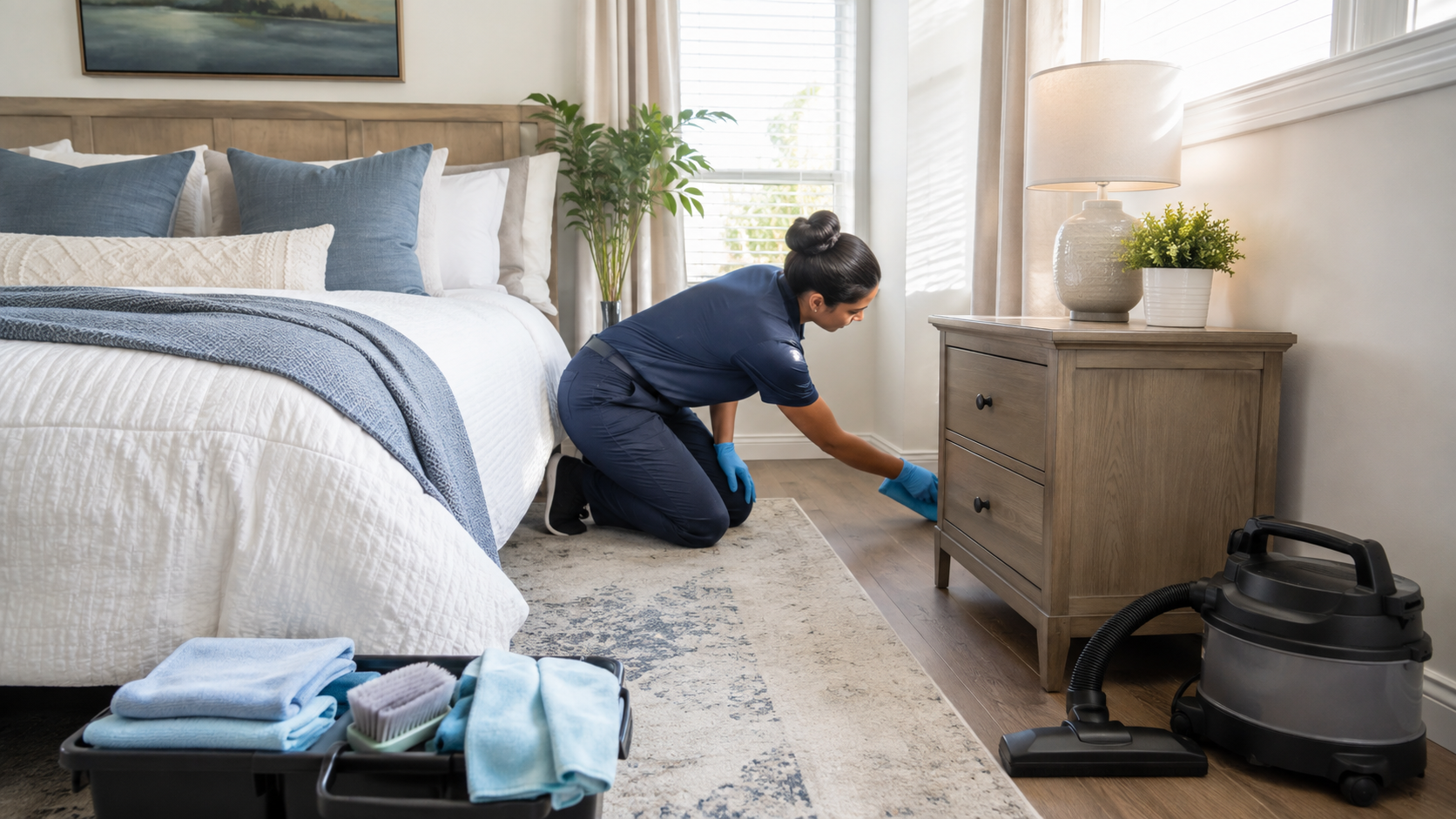
A bedroom can look tidy while still holding dust on the fan, headboard, blinds, baseboards, furniture edges, vents, and underneath accessible items. This bedroom deep cleaning checklist separates a true detailed reset from ordinary weekly cleaning so you can work in the right order and avoid cleaning the same surface twice.
Bedroom deep cleaning checklist at a glance
- Remove trash, dishes, loose belongings, and washable linens.
- Check product labels and surface-care instructions before applying moisture or cleaner.
- Dust ceiling fans, light fixtures, vents, corners, and high ledges.
- Clean reachable furniture tops, fronts, sides, handles, and detail edges.
- Dust the headboard, bed frame, lamps, décor, and accessible areas around the bed.
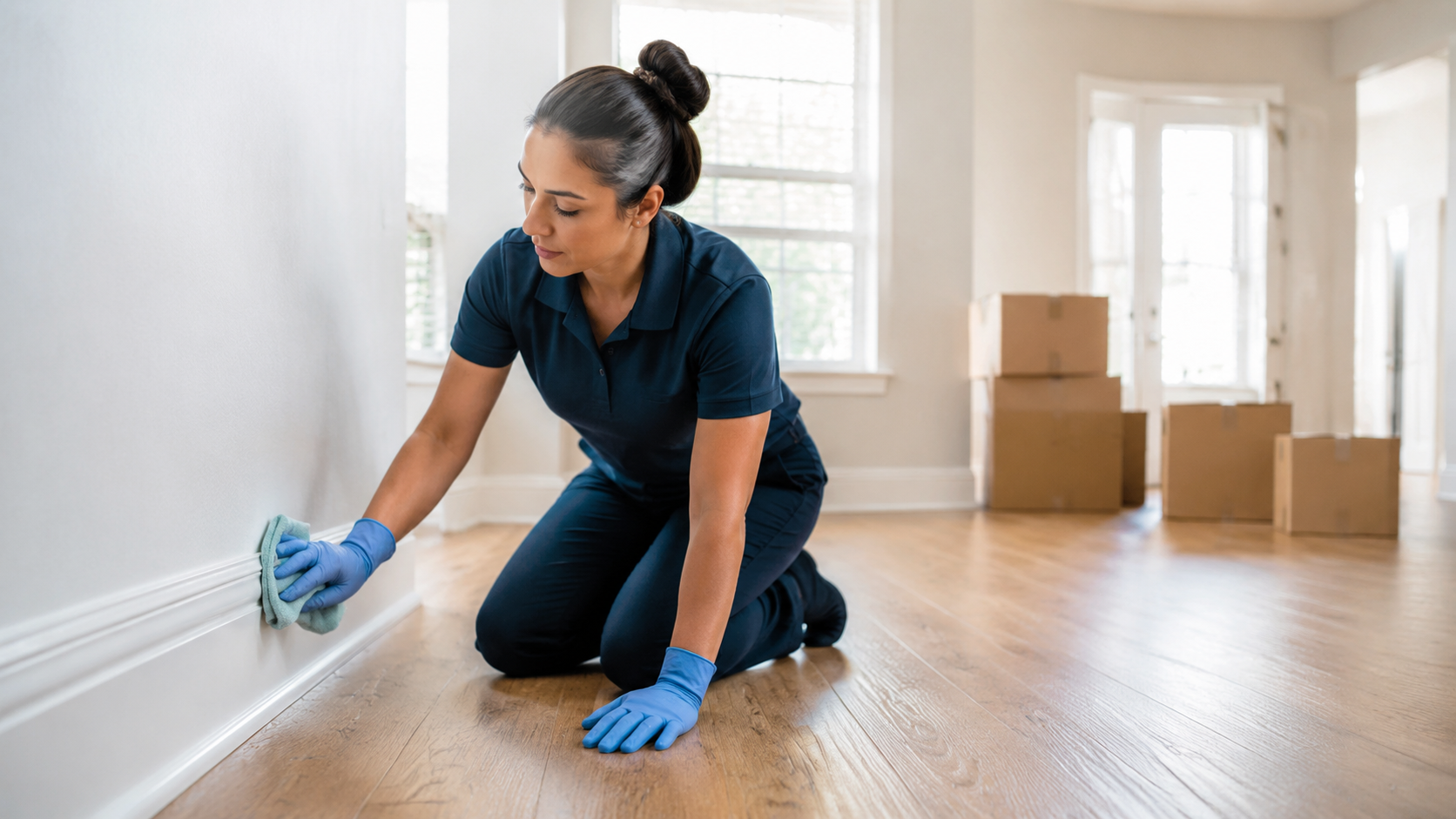
- Detail doors, switch plates, trim, baseboards, and reachable wall marks when the finish permits.
- Clean closet shelves, rods, and accessible floor space after belongings are cleared.
- Dust blinds and sills; clean interior glass only when it is part of the chosen scope.
- Vacuum upholstery or carpet only with the correct attachment and approved method.
- Vacuum hard floors and carpet thoroughly, then mop compatible hard flooring last.
What should you do before deep cleaning a bedroom?
Start by creating access. Put away valuables, medications, paperwork, fragile décor, cords, and personal items. Remove dishes and trash, place laundry in one location, and strip the bed if you plan to wash the linens. Small cleared surfaces make it easier to clean carefully instead of working around clutter.
Open a window only when weather, allergies, and security allow. Review care labels for painted furniture, natural stone, specialty wood, electronics, blinds, and flooring. Never mix cleaning chemicals, and do not spray liquids directly into electronics, outlets, switches, or vents.
What is the best order for deep cleaning a bedroom?
- Clear and prepare. Remove loose belongings, trash, laundry, fragile items, and obstacles.
- Work from high to low. Start with fans, vents, upper corners, and tall furniture so falling dust is collected later.
- Clean dry dust before wet wiping. Removing loose soil first reduces smearing and protects many surfaces.
- Detail fixed surfaces and furniture. Clean the room perimeter, furniture, bed area, doors, and reachable trim.
- Finish with the floor. Vacuum edges and open areas, then mop compatible hard flooring after everything above it is complete.
- Complete a final walkthrough. Check corners, furniture edges, access areas, and anything that was intentionally excluded.
Routine bedroom cleaning vs. bedroom deep cleaning
Routine bedroom cleaning
- Dusts open, reachable surfaces
- Empties ordinary trash
- Makes the bed when agreed and linens are ready
- Vacuums or mops accessible floors
- Maintains a room that is already at a workable baseline
Bedroom deep cleaning
- Adds detail to buildup-prone surfaces
- Addresses reachable fans, vents, trim, doors, and baseboards
- Gives more attention to furniture edges and accessible areas around the bed
- May include cleared closet surfaces and detailed window areas when approved
- Creates a stronger starting point before recurring home cleaning
If you are deciding where to start, compare deep cleaning versus recurring cleaning. For a whole-home view, see what a professional deep cleaning can include.
Dust ceiling fans, vents, lights, and high surfaces first
Use a stable, appropriate tool to dust reachable fan blades, light fixtures, air-return covers, vents, upper corners, and ledges. Support delicate components instead of pulling on them. Avoid wetting electrical fixtures, and leave inaccessible heights or fixtures requiring specialty equipment outside the standard scope.
Fan blades can release a surprising amount of dust, so clean them before the headboard, furniture, or floor. If a vent has heavy residue, suspected mold, pest activity, or contamination inside the ductwork, stop and use the appropriate specialist rather than treating it as ordinary household dust.
Clean bedroom furniture and everyday touchpoints
Dust dressers, nightstands, shelves, lamps, frames, mirrors, and décor using a method compatible with each material. Clean handles, pulls, switch plates, door handles, and other frequently touched areas. Pay attention to edges, legs, and the narrow dust-catching spaces beside furniture when they are safely reachable.
Do not saturate wood, veneer, unsealed finishes, or electronics. Spray product onto a cloth when appropriate instead of misting nearby belongings. Interior drawers and cabinets should be emptied before cleaning and included only when that scope has been requested.
Clean the bed area safely
Dust the headboard and accessible bed-frame surfaces using a material-safe method. Vacuum visible dust and debris around the bed and beneath it only where the equipment can reach without lifting or dragging heavy furniture. A cleaning team should not be expected to move a heavy bed, adjustable base, packed storage, or delicate furniture unless that work was specifically evaluated and approved.
Mattress vacuuming, deodorizing, stain treatment, steam treatment, and sanitizing claims are separate from ordinary bedroom cleaning. Follow the mattress manufacturer’s instructions and use a qualified specialty provider when treatment is required.
Clean closets only after creating access
A deep clean can address cleared closet shelves, rods, baseboards, and accessible floors. Clothing, shoes, boxes, and personal storage limit what can be reached. Remove or consolidate belongings first if you want more complete access.
Organizing and resetting belongings is a separate task from cleaning. Keep the scope clear so fragile items, jewelry, documents, and personal property are not handled unexpectedly.
Address blinds, sills, doors, trim, and baseboards
Remove loose dust from blinds with a suitable tool and gentle pressure. Detail window sills, door panels, frames, trim, and baseboards without over-wetting painted or wood surfaces. Spot-clean reachable wall marks only after testing the finish; some flat paints burnish, fade, or lift when rubbed.
Interior window glass may be a separate add-on, and exterior glass is a different service. Confirm the number, height, access, screens, and condition before assuming every window surface is included.
Finish with carpet or hard flooring
Vacuum the room perimeter, corners, under safely accessible furniture edges, and open floor area. Use the correct setting for rugs and carpet, and check that loose fringe, cords, or small objects cannot be pulled into the machine. For compatible hard flooring, vacuum first and mop with the correct amount of moisture.
Routine vacuuming is different from extraction, stain treatment, odor treatment, or specialty fiber care. If the bedroom carpet needs more than dry soil removal, review professional carpet cleaning options and confirm the material and condition.
Should you deep clean the bedroom yourself or hire a professional?
DIY may fit when
The room is manageable, surfaces are known, you have safe access, and you can complete the work without rushing or moving heavy items.
Professional cleaning may fit when
Buildup has accumulated, several rooms need a reset, time is limited, or you want a defined scope completed before beginning recurring service.
Tidy Upped provides deep cleaning services for eligible homes in Allen and nearby North Dallas communities. The recommended scope depends on the bedroom’s condition, furnishings, access, requested details, and the rest of the home.
How often should a bedroom be deep cleaned?
There is no universal calendar that fits every bedroom. Consider a detailed reset when visible dust returns quickly, pet hair or dander collects around furniture, blinds and baseboards show buildup, the room has been occupied through a renovation, a seasonal change creates more dust, or routine cleaning no longer restores the room to a comfortable baseline.
Once the room is reset, a consistent routine can reduce future buildup. Use the simpler room cleaning checklist for regular upkeep between deeper visits.
Final bedroom walkthrough
- Look at the room from the doorway and check high corners, the fan, and ledges.
- Confirm furniture tops, handles, headboard surfaces, doors, trim, and baseboards were addressed as planned.
- Check floor edges and safely accessible spaces beside and beneath furniture.
- Return only clean, dry items to shelves or surfaces.
- Note stains, damage, inaccessible areas, or specialty work that needs a separate plan.
- Restore ventilation and make sure products, tools, and cords are removed safely.
Bedroom deep cleaning FAQs
What is included in a bedroom deep cleaning?
How long does it take to deep clean a bedroom?
Do professional cleaners move beds and heavy furniture?
Is mattress cleaning included in bedroom deep cleaning?
Should I declutter before a professional bedroom deep cleaning?
Is bedroom deep cleaning the same as recurring cleaning?
Need a detailed reset for more than one bedroom?
Tell Tidy Upped about the home, current condition, priorities, access, and timing. We will help identify whether a deep cleaning or another service fits the work.

Leave A Comment