
Green cleaning is not about trading effective cleaning for vague “natural” claims. It is a practical way to reduce unnecessary chemical exposure, waste, and residue while still choosing products and methods that fit the surface and the job.
For North Texas homes, the biggest gains usually come from simple decisions: using the right amount of product, choosing fragrance-free or independently reviewed options when possible, relying on microfiber and good ventilation, and reserving stronger disinfectants for situations that actually require them.
What is green cleaning?
Green cleaning combines safer product selection with lower-waste cleaning methods. A product does not become environmentally preferable just because the label says “natural,” “plant-based,” or “non-toxic.” Look for meaningful ingredient disclosure and third-party programs. The EPA Safer Choice program, for example, evaluates product ingredients within their functional classes while also considering performance requirements.
A useful green-cleaning plan considers four things:
- Ingredients: Are they appropriate for the people, pets, and surfaces in the space?
- Dosage: Are you using only the amount the label requires?
- Method: Can microfiber, dwell time, warm water, or mechanical agitation do more of the work?
- Waste: Can you reduce disposable wipes, excess packaging, and repeated product purchases?
Seven practical benefits of green cleaning
1. Less unnecessary fragrance and residue
Heavy fragrance is not proof that a room is clean. Fragrance-free products can be a better fit for households that prefer fewer lingering scents. Measuring concentrates correctly and avoiding product buildup also helps reduce sticky floors, streaked counters, and residue that attracts soil.
2. A simpler product cabinet
Many homes accumulate a different bottle for every surface. A smaller set of well-chosen products—such as a neutral all-purpose cleaner, a surface-appropriate bathroom product, glass cleaner, and a true disinfectant for specific situations—can cover most routine needs. Fewer products also make it easier to follow label directions and avoid unsafe combinations.
3. Lower packaging and disposable waste
Reusable microfiber cloths, washable mop pads, refillable concentrates, and properly maintained tools can replace a large share of single-use wipes and paper towels. The environmental benefit depends on how items are manufactured and washed, but using durable tools repeatedly is a straightforward way to reduce routine trash.
4. Better control over product use
More cleaner is not automatically more effective. Overdosing can leave film, increase rinsing, and waste money. Green cleaning emphasizes correct dilution, adequate dwell time, and the right tool for the soil. That makes the process more repeatable and helps products perform as intended.
5. Surface protection
Abrasive powders, strong acids, and high-pH products can damage finishes when used on the wrong material. A surface-specific plan protects natural stone, sealed wood, stainless steel, tile, grout, and painted surfaces. Extending the useful life of finishes and furnishings is both financially and environmentally responsible.
6. Safer storage habits
A green-cleaning routine still requires basic safety. Keep every product in its original labeled container, store it away from children and pets, ventilate when directed, and never mix cleaning chemicals. Reducing the number of products in the home can make safe storage easier to manage.
7. A repeatable routine instead of crisis cleaning
Short, consistent maintenance prevents soil from building to the point where aggressive products or time-consuming restoration are needed. Regular vacuuming, prompt spill cleanup, bathroom moisture control, and a planned kitchen reset make cleaning easier without relying on stronger chemistry for every visit.
How to choose greener cleaning products
Start with credible labels, not marketing language
The EPA says Safer Choice helps consumers and businesses find products that perform and contain ingredients considered safer for human health and the environment. You can use the agency’s searchable certified-product list as one screening tool. Certification does not eliminate the need to read the product label or confirm that it is safe for a particular surface.
Prefer clear ingredient and use information
Look for a complete label, specific directions, dilution ratios, surface limitations, first-aid information, and manufacturer contact details. Be cautious when a product makes broad safety claims but gives little information about how it should be used.
Understand cleaning versus disinfecting
Routine cleaning removes soil and many germs from surfaces. Disinfecting uses a registered product to kill specified microorganisms when the label directions—including pre-cleaning, concentration, and contact time—are followed. Not every surface needs routine disinfection. Use the right process for the actual risk instead of applying disinfectant everywhere.
Choose fragrance-free when that matters to your household
“Unscented” and “fragrance-free” are not always interchangeable. If avoiding fragrance is important, check the ingredient information and look for a clearly identified fragrance-free option. EPA’s Safer Choice program also has additional criteria for products that qualify for its fragrance-free designation.
Green cleaning room by room
Kitchen
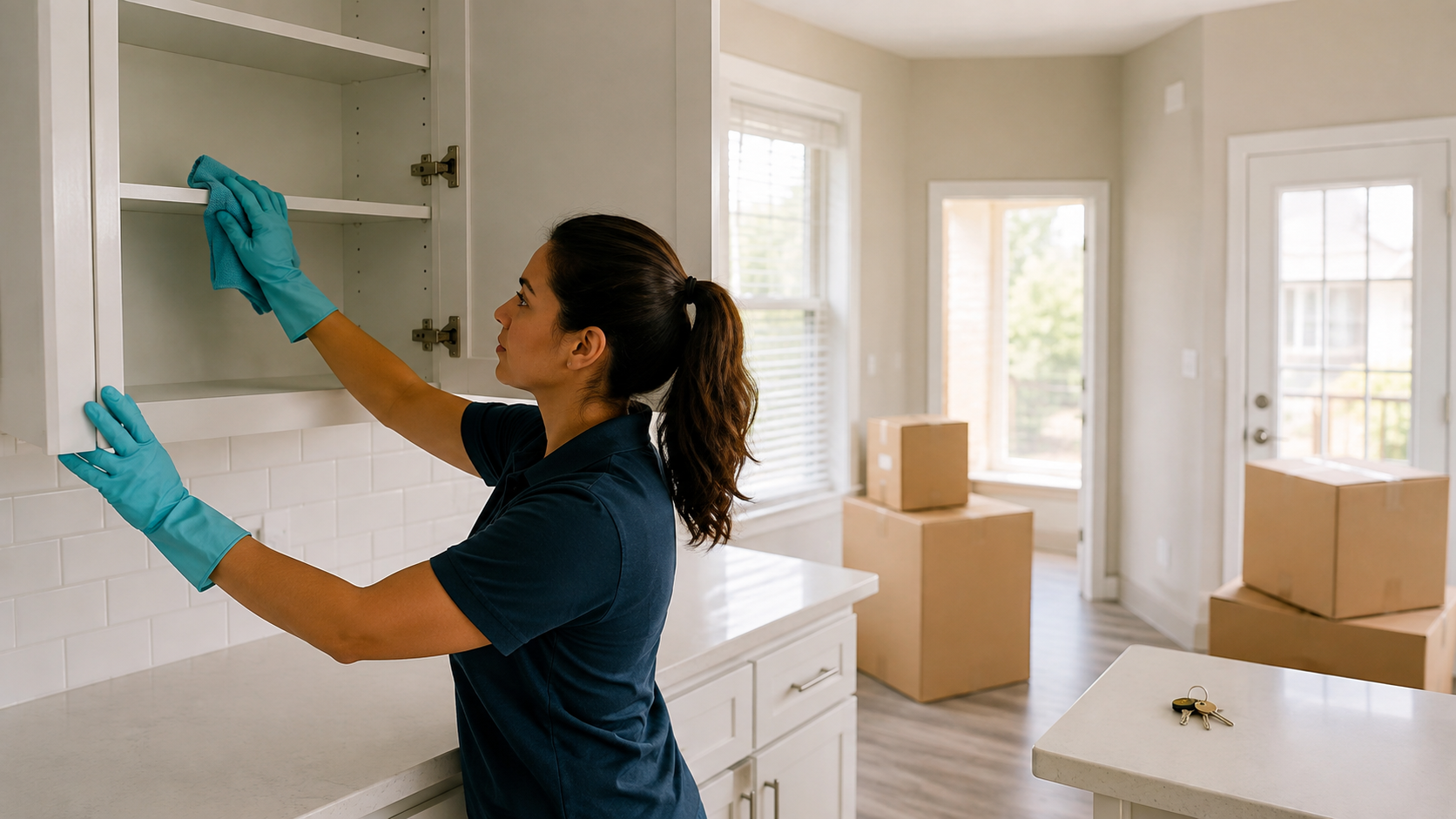
- Wipe spills promptly so they do not require harsher treatment later.
- Use a degreaser only where grease is present and follow the label’s dwell time.
- Clean food-contact surfaces with a product intended for that use and rinse when directed.
- Wash reusable cloths frequently and separate them from bathroom cloths.
Bathroom
- Control moisture with ventilation and regular drying of shower surfaces.
- Use a surface-safe product for soap scum instead of aggressive scrubbing that can damage finishes.
- Clean first; disinfect only when needed and only with a product labeled for the surface.
- Never combine bleach with ammonia, acids, or other cleaners.
Floors
- Vacuum or dry-mop before wet cleaning so grit does not scratch the finish.
- Use the smallest amount of a floor-approved product that the manufacturer recommends.
- Avoid excess water on wood and laminate.
- Wash reusable mop pads after use and let them dry fully.
Bedrooms and living areas
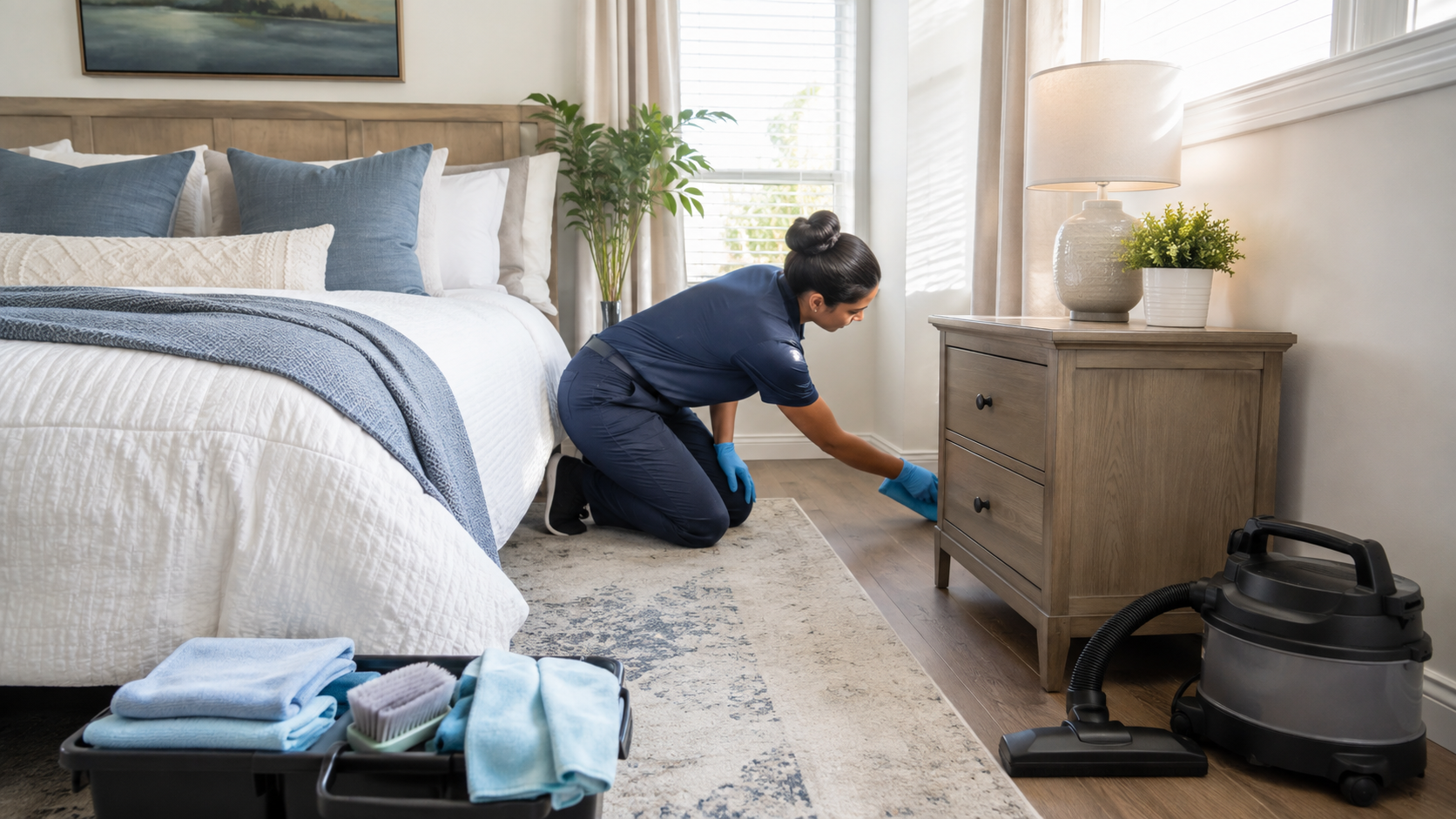
- Use a HEPA-filter vacuum when appropriate and maintain the filter according to the manufacturer.
- Dust with microfiber from high surfaces to low surfaces before cleaning floors.
- Wash bedding and washable textiles on a setting appropriate for the fabric rather than defaulting to the hottest cycle.
- Address entryway soil with mats and routine vacuuming.
Common green-cleaning mistakes
- Assuming “natural” means safe: Natural substances can still irritate, damage surfaces, or be unsafe around pets.
- Mixing DIY ingredients: Homemade does not automatically mean safe or effective. Never experiment with chemical combinations.
- Using vinegar everywhere: Acid can damage natural stone and some grout, finishes, and appliance components.
- Overusing essential oils: Concentrated oils can create exposure concerns and may be unsafe for pets. They are not a substitute for a registered disinfectant.
- Ignoring the label: Correct dilution, contact time, protective equipment, ventilation, and rinsing instructions matter.
- Buying more products than necessary: A crowded cabinet increases waste and the chance of using the wrong product.
A simple green-cleaning starter kit
- Color-coded microfiber cloths
- Washable flat-mop pads
- A vacuum with well-maintained filtration
- A neutral all-purpose cleaner appropriate for common sealed surfaces
- A dedicated bathroom cleaner for the actual surfaces in the home
- A glass cleaner or manufacturer-approved glass method
- A labeled disinfectant for situations that require it
- Reusable gloves and clearly labeled storage
The goal is not to use every item on every visit. It is to have a small, understandable system that handles routine cleaning without excess product.
Green cleaning in Allen and North Texas
Dust, pollen, tracked-in soil, hard-water residue, busy family schedules, and pet hair all shape the cleaning needs of local homes. A practical plan focuses on entryways, floors, HVAC-return areas, kitchens, bathrooms, and high-touch spaces while choosing products that match the household’s preferences.
Tidy Upped offers recurring house cleaning, deep cleaning, and other residential and commercial options across Allen and nearby communities. Tell us about pets, fragrance preferences, sensitive surfaces, and priorities when you request a free cleaning quote.
Frequently asked questions
Is green cleaning as effective as conventional cleaning?
It can be when the product, method, and surface are matched correctly. Effective cleaning depends on soil removal, dilution, dwell time, agitation, and proper tools—not on how strong a product smells.
Does green cleaning mean using only vinegar and baking soda?
No. Green cleaning can include professionally formulated products, reusable tools, accurate dilution, and lower-waste routines. Vinegar and baking soda are not appropriate for every surface or task.
How do I know whether a product is genuinely greener?
Look past unregulated marketing terms. Review ingredient and safety information, follow the manufacturer’s directions, and use credible programs such as EPA Safer Choice as one screening tool.
Can I disinfect with a green cleaner?
Only if the product is registered and labeled for the microorganism and surface involved. Cleaning and disinfecting are different processes. Follow the entire label, including contact time.
What should I tell a cleaning company before service?
Share pets, allergies or fragrance preferences, delicate surfaces, product restrictions, access details, and the areas you care about most. Clear information helps the company recommend an appropriate scope.

Leave A Comment