

Table of Contents
- Is There Really a “Best” Time to Clean Your House?
- Cleaning in the Morning: Is It the Most Productive Time to Clean Your House?
- Cleaning in the Evening: A Calm Reset Before Bed
- Which Time of Day Is Truly Best?
- Best Time of Day to Clean (Quick Comparison Guide)
- How Your Energy Type Affects Cleaning Time
- Best Time to Clean Based on Task Type
- Matching Task Intensity to Time of Day
- Does Season Affect the Best Time of the Day to Clean Your House?
- The Science Behind Cleaning Timing
- When You Can’t Find the Time to Clean
- Why Time Constraints Disrupt Cleaning Consistency
- How Professional Cleaning Services Support Home Maintenance
- Reframing the Question
- Frequently Asked Questions
- What Is the Best Time of Day to Clean?
Key Takeaways
Is There Really a “Best” Time to Clean Your House?
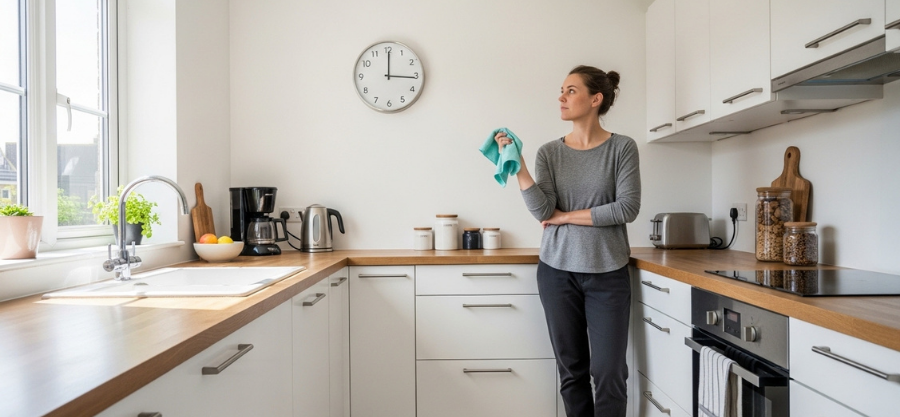
If you’re searching for the best time of the day to clean your house, you’re likely hoping for a simple answer — morning, afternoon, or night. The truth is more practical than absolute.
There is no universal “perfect hour” that guarantees better cleaning results. Instead, the best time to clean your home depends on a combination of energy levels, daily schedule, task type, lighting conditions, and household activity patterns. When these factors align, cleaning feels easier, faster, and more effective.
Rather than asking, “When should I clean?”, a more productive question is:
“When am I most likely to clean thoroughly and consistently?”
Consistency is what keeps a home clean — not the clock.
Let’s examine the core factors that determine the best time of day to clean.
Your Energy Levels: Morning Person or Night Owl?
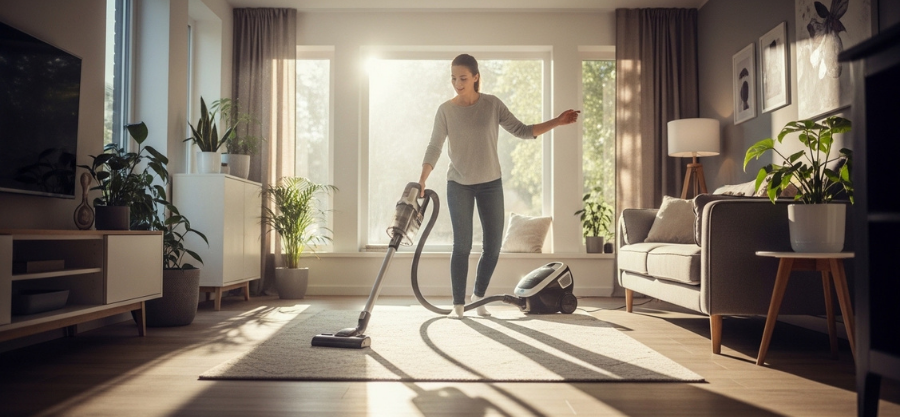
Your natural rhythm plays a major role in cleaning productivity. If you’re most alert in the morning, that’s when demanding tasks like scrubbing bathrooms, vacuuming, or mopping floors will feel less draining. Morning energy typically supports physical movement and detail-focused work, making it an ideal time for deep cleaning.
On the other hand, if your focus improves later in the day, evening cleaning may feel more natural. Some people find tidying at night calming and mentally clarifying. The key is to schedule heavier tasks during your peak energy window and lighter maintenance during lower-energy periods.
Cleaning against your biological rhythm often leads to procrastination or rushed work. Cleaning with it increases efficiency.
Your Daily Schedule and Commitments

The best time of day to clean your house must realistically fit into your routine. A parent managing school drop-offs may not have uninterrupted morning time. A remote worker might benefit from an afternoon reset. Someone with long work hours may rely on evening maintenance cleaning.
Cleaning works best when it complements your schedule rather than competes with it. Even 20–30 minutes strategically placed in your day can maintain order if done consistently.
If mornings are chaotic, they may not be ideal for deep cleaning. If evenings are exhausting, that may not be the time for scrubbing floors. The best cleaning schedule is the one you can repeat weekly without burnout.
The Type of Cleaning Task Matters
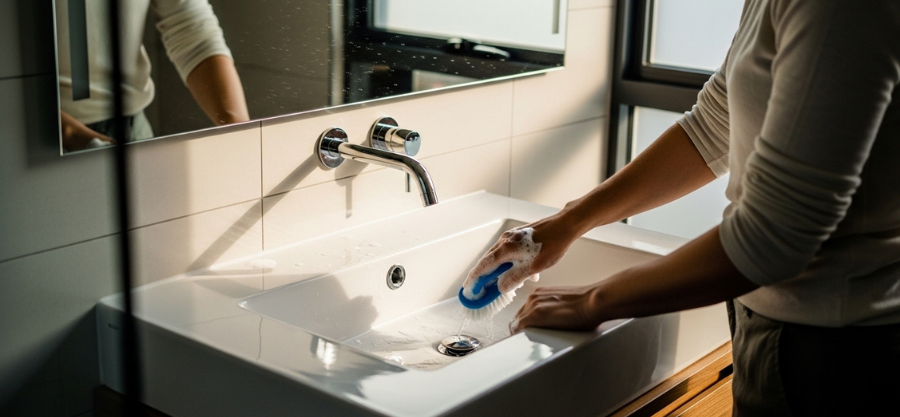
Not all cleaning tasks require the same level of focus or energy, and this directly affects the best time to clean your house.
Deep cleaning tasks — such as bathroom scrubbing, floor mopping, carpet vacuuming, and window washing — require both physical effort and attention to detail. These are typically best handled during high-energy periods with strong natural lighting.
Maintenance tasks — like wiping counters, washing dishes, or decluttering surfaces — can be done in shorter sessions and often work well in the evening.
Organizing projects requires mental clarity and decision-making, which many people find easier earlier in the day rather than late at night.
Matching the task intensity to the time of day significantly improves efficiency.
Natural Light and Visibility

Lighting impacts cleaning quality more than most people realize. Natural daylight makes it easier to see dust particles, streaks on glass, smudges on stainless steel, and debris on floors. This is why many homeowners find morning or early afternoon to be the best time of day to clean the house thoroughly.
While artificial lighting works, it rarely reveals dirt as clearly as sunlight. If your goal is deep cleaning or detailed work, schedule it during daylight hours whenever possible.
For lighter tidying or routine resets, lighting matters less, making evening cleaning perfectly acceptable.
Household Activity and Foot Traffic
Cleaning during peak activity hours can feel counterproductive. If family members are moving through the kitchen while you mop or children are playing in freshly vacuumed areas, your work may not last long.
For homes with multiple occupants, the best time to clean often coincides with lower foot traffic — early morning before everyone wakes up or later evening when activity slows down.
Cleaning high-traffic areas when they’re temporarily empty improves results and reduces frustration.
The Real Answer: The Best Time Is the Most Sustainable Time
The best time of the day to clean your house is not determined by tradition or productivity trends. It is determined by sustainability.
If you can clean consistently at a specific time — without feeling rushed, resentful, or exhausted — that is your optimal cleaning window.
A consistent 20-minute daily routine at the right time will outperform an occasional three-hour weekend marathon done at the wrong time.
When energy, schedule, task type, lighting, and household flow align, cleaning becomes more manageable — and your home stays cleaner with less effort.
Cleaning in the Morning: Is It the Most Productive Time to Clean Your House?
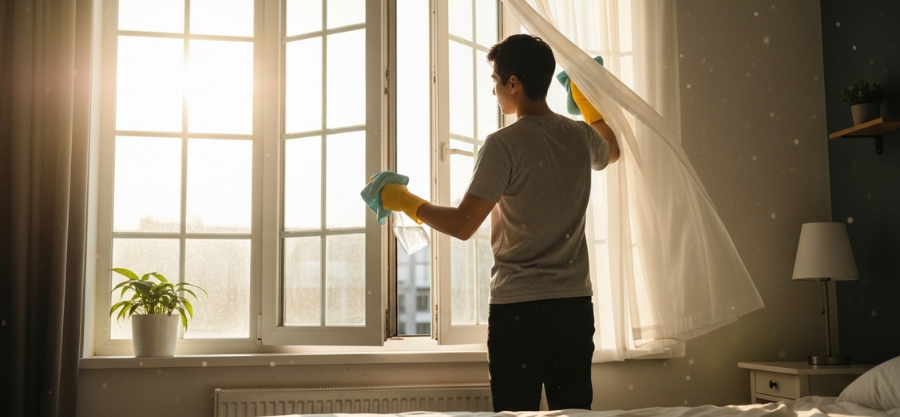
For many homeowners, morning is considered the best time of the day to clean the house. Energy levels are typically higher, distractions are fewer, and natural light improves visibility. If you’re someone who feels alert and motivated early in the day, morning cleaning can significantly improve both efficiency and results.
Why Morning Cleaning Improves Results
One of the biggest advantages of cleaning in the morning is natural daylight. Sunlight exposes dust on furniture, streaks on mirrors, smudges on windows, and debris on floors more clearly than artificial lighting. This visibility allows for more thorough cleaning and reduces the chances of missed spots. When deep cleaning or dusting, morning light can make a noticeable difference in overall cleanliness.
Morning energy also supports physical tasks. Activities like vacuuming, mopping, scrubbing bathrooms, or wiping down baseboards require movement and stamina. When performed during peak alertness, these tasks feel less exhausting and are often completed faster. Many people find that a focused 20–30 minute cleaning session in the morning feels energizing rather than draining.
How Morning Cleaning Sets the Tone for the Day
Cleaning high-traffic areas early helps prevent clutter from building up throughout the day. Wiping kitchen counters after breakfast, clearing dishes immediately, tidying the entryway, and refreshing bathroom surfaces create an organized starting point. When the home begins the day clean, it is easier to maintain that order.
There is also a psychological benefit. Completing chores in the morning removes the mental burden of unfinished tasks. Instead of thinking about cleaning later, you move into work or personal responsibilities with clarity and reduced stress. For many people, this mental reset makes morning the best time to clean the house consistently.
Best Cleaning Tasks for the Morning
Morning is ideal for deep cleaning and detail-oriented tasks that require energy and strong lighting. This includes vacuuming main living areas, cleaning bathrooms, wiping kitchen surfaces thoroughly, dusting furniture, and washing windows. It’s also a good time to open windows for ventilation while cleaning.
If your goal is maximum efficiency and visible results, morning often provides the strongest advantage.
Cleaning in the Afternoon: The Strategic Reset Time
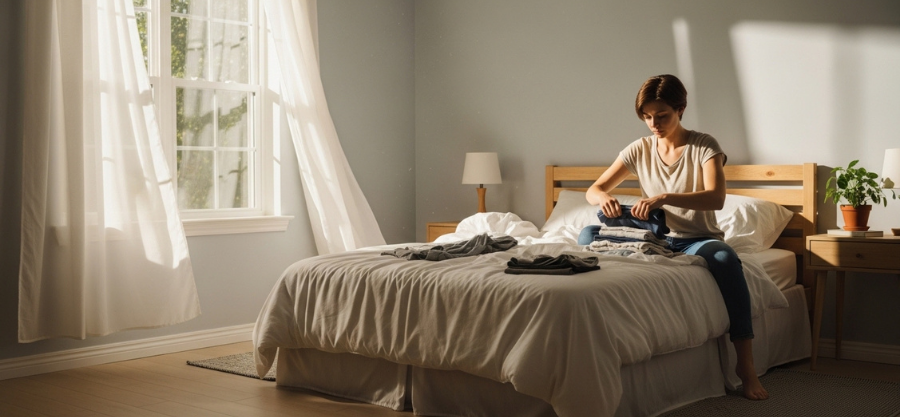
While mornings are often associated with productivity, afternoon cleaning can be the best time of day to clean house for people with flexible schedules, remote work setups, or slower midday routines.
Why Afternoon Cleaning Works
Energy levels commonly dip after lunch, but light physical activity can restore alertness. Instead of pushing through fatigue passively, cleaning for 15–30 minutes can improve circulation and refocus the mind. This makes afternoon cleaning a practical solution for beating the midday slump.
Afternoon is also an effective time to correct the mess created during a busy morning. Breakfast dishes, scattered mail, and minor clutter can accumulate quickly. Addressing these areas mid-day restores order before evening routines begin.
Preparing the Home for Evening Comfort
Cleaning in the afternoon creates a smoother transition into the evening. When kitchen surfaces are wiped down and clutter is cleared before dinner, the home feels calmer. Relaxation becomes easier when you’re not surrounded by unfinished tasks.
Afternoon cleaning often strikes a balance between productivity and sustainability. It’s typically less rushed than morning and less exhausting than late-night cleaning.
Best Cleaning Tasks for the Afternoon
The afternoon is well suited for moderate tasks that require focus but not heavy physical effort. Bathroom surface refreshes, organizing clutter piles, folding laundry, wiping down kitchen appliances, cleaning out the refrigerator, or tidying pantry shelves fit well in this window.
If you work from home or manage your own schedule, afternoon may be the most practical and consistent time to clean your house.
Cleaning in the Evening: A Calm Reset Before Bed
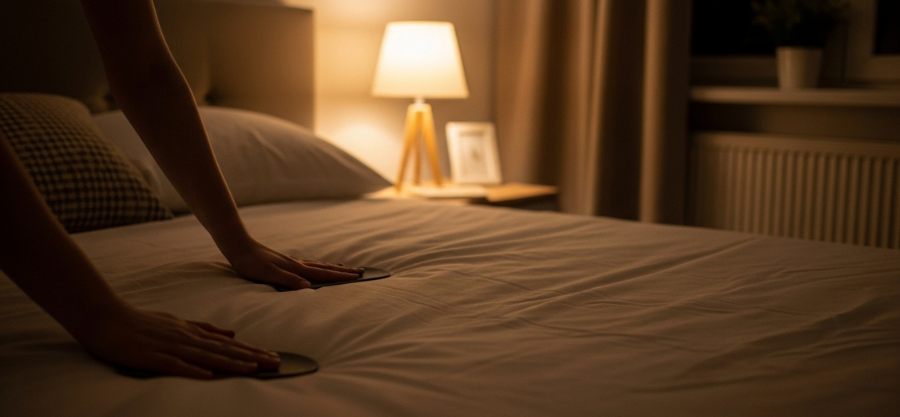
For night owls or those with packed daytime schedules, evening may be the best time of the day to clean house. While it’s not ideal for heavy scrubbing or loud equipment, it is highly effective for maintenance and reset routines.
Why Evening Cleaning Reduces Stress
A tidy environment supports better sleep. Clearing surfaces, organizing living spaces, and straightening bedding reduce visual clutter and create a calmer atmosphere. Walking into a clean bedroom at night signals closure for the day.
Evening cleaning also simplifies the following morning. Washing dishes, wiping counters, setting out clothes, and preparing coffee equipment prevent chaos at sunrise. You wake up to order rather than leftover mess.
Small nightly resets prevent larger cleaning sessions later. When clutter is handled daily, weekend deep cleaning becomes faster and less overwhelming.
Best Cleaning Tasks for the Evening
Evening is ideal for light maintenance tasks such as decluttering living areas, washing dishes, wiping kitchen counters, sweeping main walkways, straightening bedding, and clearing dining surfaces. These activities maintain cleanliness without overstimulation.
However, loud vacuuming or heavy scrubbing late at night may disrupt household members or neighbors, especially in shared living spaces.
Which Time of Day Is Truly Best?
Morning is typically best for deep cleaning and detailed tasks. Afternoon works well for resets and moderate organizing. Evening is ideal for light maintenance and preparing for the next day.
The best time of the day to clean your house ultimately depends on when you can clean consistently without burnout. Matching your energy levels, task intensity, and household schedule to the right time window will produce better results than forcing a routine that doesn’t fit your lifestyle.
Best Time of Day to Clean (Quick Comparison Guide)
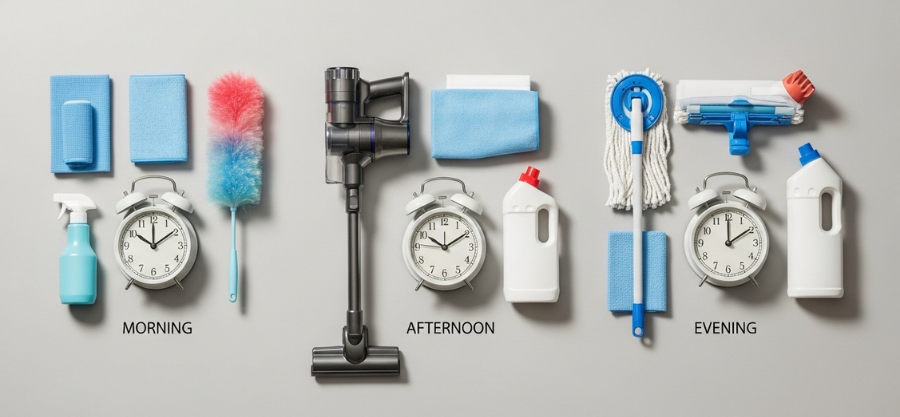
If you’re trying to determine the best time of the day to clean your house, it helps to look at specific performance factors rather than general preference. Cleaning efficiency is influenced by lighting, energy levels, household activity, and task intensity.
The table below summarizes when cleaning tends to be most effective based on these measurable conditions.
| Factor | Best Time |
|---|---|
| Natural light visibility | Morning / Afternoon |
| Highest energy levels | Morning |
| Quiet environment | Early morning |
| Lowest foot traffic | Evening |
| Deep cleaning tasks | Morning |
| Quick reset tasks | Evening |
| Breaking up workday | Afternoon |
How to Use This Comparison
The best time of day to clean your house depends on matching the task to the strongest condition. Deep cleaning aligns with energy and daylight. Maintenance aligns with low traffic and convenience. Reset tasks align with transitional periods in your schedule.
Instead of choosing one universal cleaning time, use this framework to assign the right task to the right window. This approach improves efficiency, reduces frustration, and makes your cleaning routine more sustainable long term.
How Your Energy Type Affects Cleaning Time
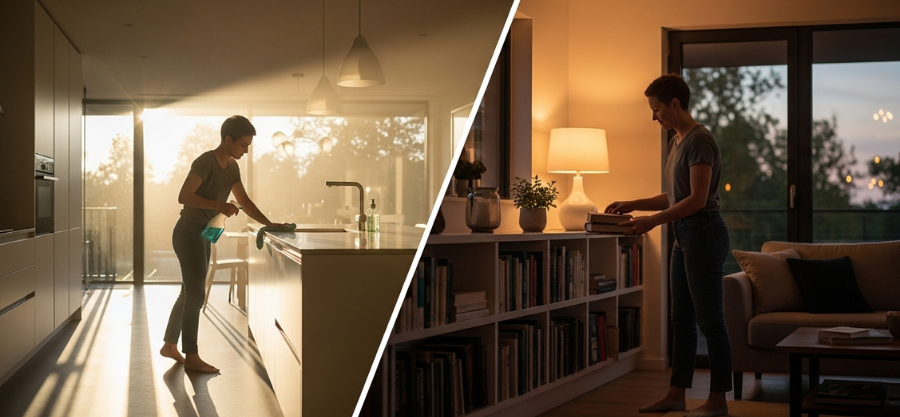
Your natural circadian rhythm plays a major role in determining the best time of the day to clean your house. Instead of forcing yourself into a schedule that feels draining, aligning cleaning tasks with your biological energy pattern improves efficiency, consistency, and results.
Below is a structured comparison to help you match your energy type with the most effective cleaning schedule.
| Energy Type |
When You Feel Most Alert |
Best Cleaning Time | Ideal Tasks | Tasks to Limit |
|---|---|---|---|---|
| Morning Lark | Early morning / sunrise | Morning | Deep cleaning, bathroom scrubbing, vacuuming, mopping, detailed dusting | Heavy evening cleaning |
| Night Owl | Late afternoon / evening | Evening | Organizing, decluttering, dishwashing, surface resets, prep for next day | Intense late-night scrubbing or loud vacuuming |
The Type of Cleaning Task Matters
Work with your biology — not against it.
When your cleaning schedule aligns with your natural energy peaks, tasks feel less overwhelming and results improve. The best time to clean your house isn’t universal; it’s the time when your body and focus are most supportive of consistent action.
Best Time to Clean Based on Task Type
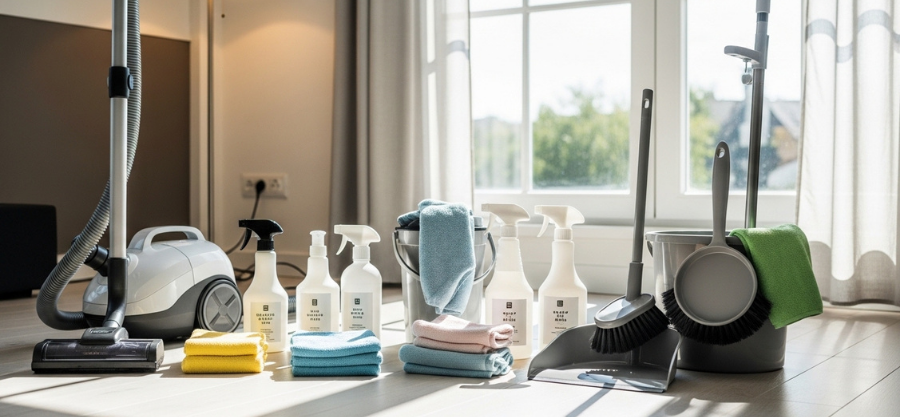
Matching the type of cleaning task to the right time of day improves efficiency, consistency, and results. The best time of the day to clean your house depends largely on task intensity, energy demand, lighting needs, and workflow timing.
Below is a structured comparison to help you schedule cleaning tasks strategically.
| Cleaning Task | Best Time of Day | Why This Time Works Best | Key Benefit |
|---|---|---|---|
| Deep Cleaning (Bathrooms, Floors, Windows) | Morning | Higher energy levels and strong natural light improve visibility and physical performance | More thorough and detailed results |
| Kitchen Maintenance | Morning + Evening | Cleaning immediately after meals prevents buildup and controls mess in real time | Better hygiene and easier daily upkeep |
| Decluttering & Organizing | Afternoon | Requires decision-making focus and moderate mental energy | Improved productivity and fewer unfinished projects |
| Laundry | Morning or Early Afternoon | Allows full wash–dry–fold cycle to be completed in one day | Prevents backlog and overnight damp clothes |
| Bedroom Reset | Evening | Aligns with sleep routine and prepares space for rest | Better sleep hygiene and reduced morning stress |
How to Use This Table
If you’re trying to determine the best time of the day to clean house, focus on matching task demand with your peak performance window.
High-effort, detail-heavy cleaning benefits from morning energy and daylight. Maintenance cleaning works best around daily activity patterns. Organizing requires mental clarity, often strongest mid-day. Preparation and reset tasks align naturally with evening routines.
Scheduling cleaning based on task type — rather than cleaning everything at once — increases efficiency and makes home maintenance more sustainable long term.
Matching Task Intensity to Time of Day
The best time of the day to clean your house depends on aligning task intensity with your physical and mental capacity. High-effort, detail-heavy cleaning benefits from morning energy and daylight. Maintenance cleaning aligns with activity patterns. Organizing aligns with mental clarity. Preparation tasks align with evening routines.
When tasks are scheduled according to their functional demands rather than convenience alone, cleaning becomes more efficient, sustainable, and consistent.
Does Season Affect the Best Time of the Day to Clean Your House?
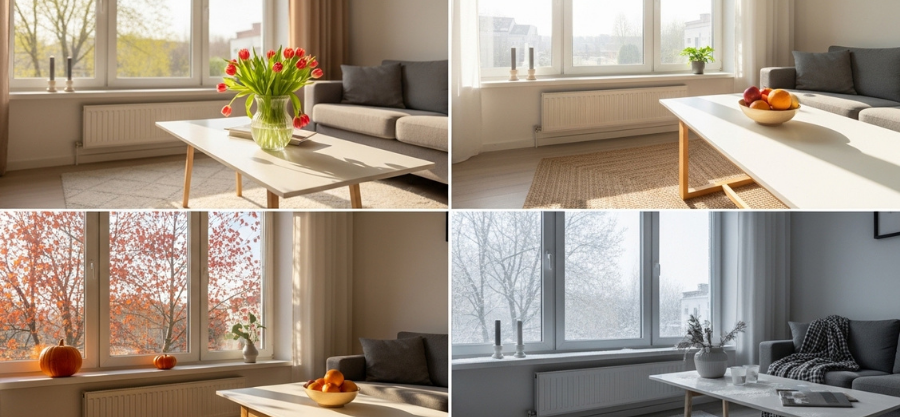
Yes — seasonal changes directly impact the best time of the day to clean your house. Temperature, humidity, daylight hours, ventilation opportunities, and household activity patterns all shift throughout the year. Adjusting your cleaning schedule by season improves comfort, efficiency, and cleaning effectiveness.
Below is a structured breakdown of how each season influences the optimal cleaning time.
| Season | Best Time of Day to Clean | Why This Time Works Best | Primary Cleaning Focus |
|---|---|---|---|
| Spring | Morning | Cooler air, longer daylight, better ventilation with open windows | Deep cleaning, dust removal, window washing |
| Summer | Early Morning or Evening | Avoid peak heat and humidity; cooler indoor temperatures | Floor cleaning, allergen control, frequent surface wipes |
| Fall | Morning or Midday | Moderate temperatures and stable daylight hours | Carpet cleaning, upholstery care, seasonal prep |
| Winter | Midday or Evening | Cold mornings limit ventilation; indoor-focused tasks dominate | Entryways, high-traffic areas, maintenance cleaning |
The best time of the day to clean your house shifts with environmental conditions. In warmer seasons, early cleaning maximizes comfort and ventilation. In colder seasons, midday and evening routines become more practical.
Adapting your cleaning schedule seasonally improves efficiency, reduces physical strain, and ensures your home stays consistently clean year-round.
The Science Behind Cleaning Timing
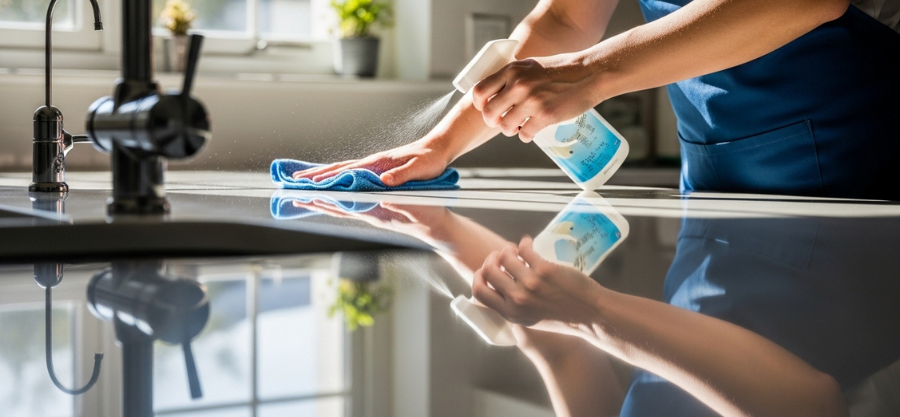
If you’re trying to determine the best time of the day to clean your house, the answer is rooted in performance variables — not preference. Cleaning quality improves when environmental and biological conditions support visibility, focus, and physical efficiency. Timing affects how thoroughly you clean, how long results last, and how sustainable the routine becomes.
Cleaning is both a physical and cognitive task. It requires visual detection of dirt, muscular effort for scrubbing and lifting, and mental focus for organizing and decision-making. When these systems are operating at their best, cleaning becomes faster and more effective.
When You Can’t Find the Time to Clean
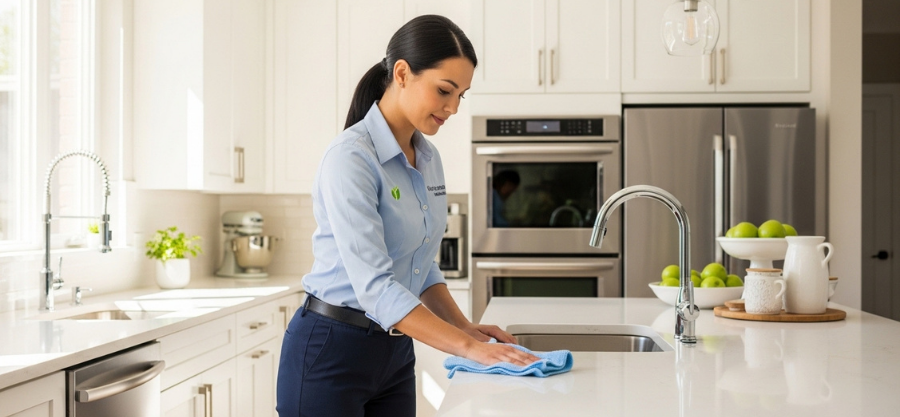
Even when you understand the best time of the day to clean your house, real life can make consistency difficult. Work demands, family responsibilities, commuting, and unpredictable schedules often eliminate ideal cleaning windows. When time is limited, the issue is no longer timing — it’s capacity.
In these situations, outsourcing cleaning may be a strategic decision rather than a luxury.
Why Time Constraints Disrupt Cleaning Consistency
Effective house cleaning requires uninterrupted time, physical energy, and mental focus. If your schedule is packed from early morning to late evening, even the best time to clean your house may not be available.
Cleaning late at night when you’re fatigued reduces effectiveness. Skipping tasks during busy weeks leads to buildup. Over time, this cycle creates stress and increases the amount of work required later.
When cleaning consistently conflicts with productivity or rest, it may be more efficient to delegate.
How Professional Cleaning Services Support Home Maintenance
Professional cleaning services maintain consistent cleanliness without taking up your personal time. Instead of spending weekends deep cleaning, you can focus on work, family, or rest. Services like Tidy Upped follow structured schedules to keep your home consistently maintained.
They handle deep cleaning tasks such as bathrooms, floors, baseboards, and high-touch surfaces using proper tools and systems, delivering more thorough and reliable results.
Outsourcing saves hours each month and reduces stress. A professionally maintained home improves focus, supports hygiene, and eliminates the ongoing burden of finding the best time to clean your house.
Reframing the Question
If you constantly struggle to determine the best time of the day to clean your house, the issue may not be timing at all. In high-demand schedules, eliminating the task can be more efficient than trying to optimize it.
Instead of asking when to clean, outsourcing removes the burden entirely while preserving a clean and healthy living environment.
Time is a limited resource. In some seasons of life, protecting it matters more than personally handling every household task.
Frequently Asked Questions
What Is the Best Time of Day to Clean?
- The best time of the day to clean your house is when your energy, schedule, and environment support consistent action.
- Morning is ideal for deep cleaning tasks that require focus, strength, and natural light.
- Afternoon works well for resets, organizing, and decision-based tasks.
- Evening is best for light maintenance and daily surface cleaning.
- Consistency is more important than choosing a “perfect” time.
A cleaning schedule you can maintain long term will keep your home cleaner with less overall effort.
