

A garbage disposal is one of the most overlooked appliances in the kitchen—until it starts to smell. What begins as a faint odor can quickly turn into a persistent, kitchen-wide problem if food residue is allowed to build up inside the disposal chamber and drain lines. Cleaning experts featured by TODAY emphasize that regular maintenance is the key to preventing buildup and eliminating unpleasant smells before they spread.
I learned this the hard way. For years, I treated my garbage disposal as a “set it and forget it” appliance. As long as it turned on and didn’t clog, I assumed everything was fine. Then one day, my kitchen developed an unmistakable sour smell that no surface cleaner could eliminate. The source wasn’t the trash can—it was the garbage disposal itself.
That experience led me to dig deep into proper garbage disposal cleaning and maintenance, and what I discovered is simple:
Most garbage disposal odors are 100% preventable.
Below is a proven, step-by-step system you can follow to keep your garbage disposal clean, fresh, and functioning properly year-round.
Table of Contents
- Understanding How a Garbage Disposal Really Works
- Common Garbage Disposal Myths That Cause Odors
- Why Garbage Disposal Odors Happen
- Step 1: Always Use Cold Water (This Matters More Than You Think)
- Step 2: Clean with Ice Cubes and Citrus Peels
- Step 3: Use Baking Soda and Vinegar for Deep Cleaning
- Step 4: Clean the Rubber Splash Guard (Most People Skip This)
- Step 5: Avoid These Foods at All Costs
- Troubleshooting Persistent Garbage Disposal Smells
- Long-Term Garbage Disposal Maintenance Best Practices
- Final Thoughts: A Clean Disposal Means a Cleaner Kitchen
- Frequently Asked Questions
Key Takeaways
Understanding How a Garbage Disposal Really Works
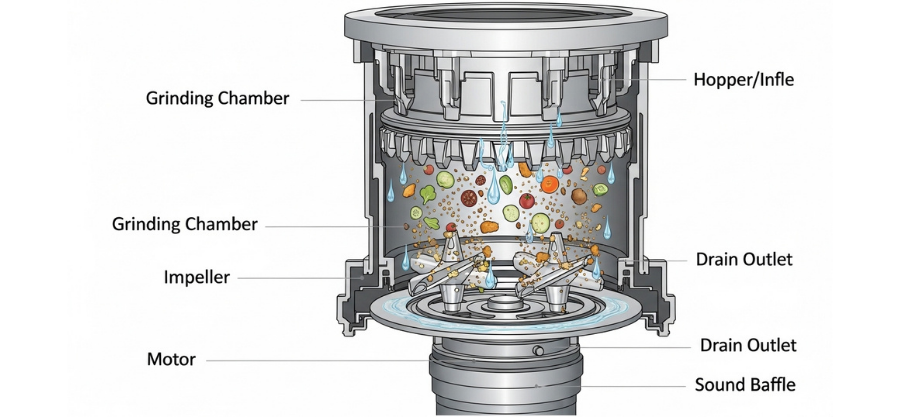
Before learning how to clean a garbage disposal, it helps to understand what’s happening under your sink.
A garbage disposal isn’t a blender with sharp blades. Instead, it uses high-speed impellers that force food waste against a grinding ring. This breaks food into small particles that wash down the drain.
Because there are no slicing blades, food doesn’t get “cut cleanly.” It gets pulverized and pushed outward, which means small particles can cling to:
- The grinding chamber
- The rubber splash guard
- The drain trap and connecting pipes
Over time, these trapped particles decompose—creating odor, bacteria buildup, and slow drainage.
Common Garbage Disposal Myths That Cause Odors
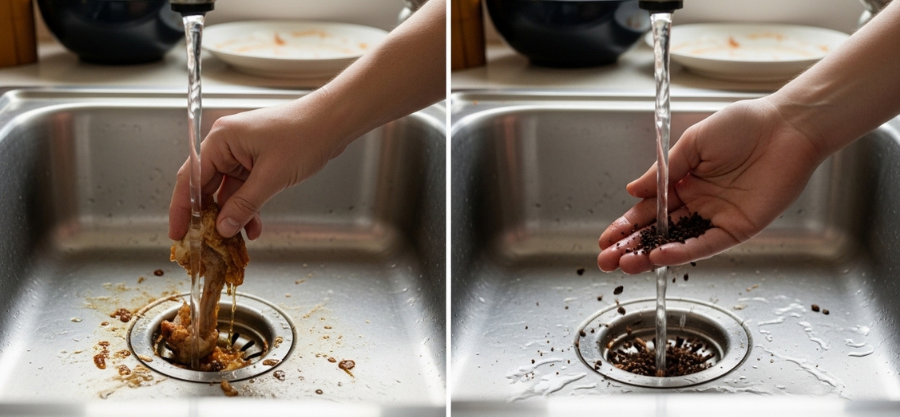
Myth 1: “Anything can go down the disposal”
This is the fastest way to create odors and clogs. Garbage disposals are designed for small, biodegradable food scraps only—not bulk waste.
Myth 2: “Chemical cleaners fix disposal smells”
Harsh chemical drain cleaners may mask odors temporarily, but they can:
- Damage internal components
- Degrade rubber seals
- Harm plumbing over time
Natural cleaning methods are safer and more effective long-term.
Why Garbage Disposal Odors Happen
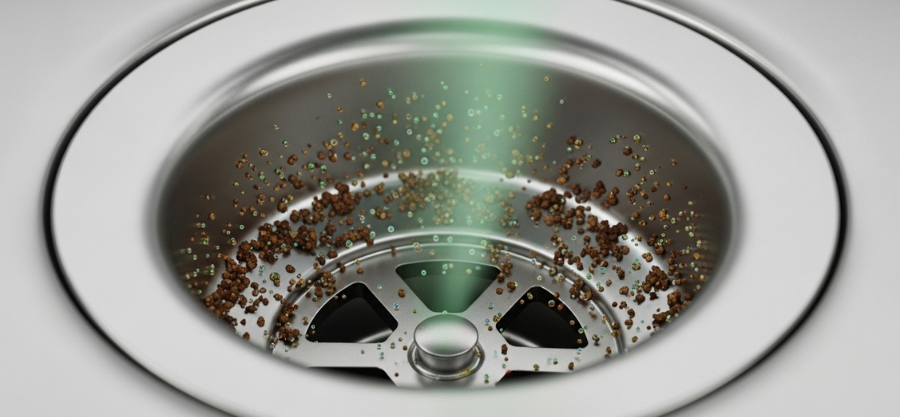
Garbage disposal smells come from decomposing organic material trapped inside the system. Moisture, warmth, and food residue create the perfect environment for odor-causing bacteria.
Think of it like a miniature compost pile under your sink.
The key to eliminating odors isn’t just cleaning—it’s preventing food from lingering in the first place.
Step 1: Always Use Cold Water (This Matters More Than You Think)
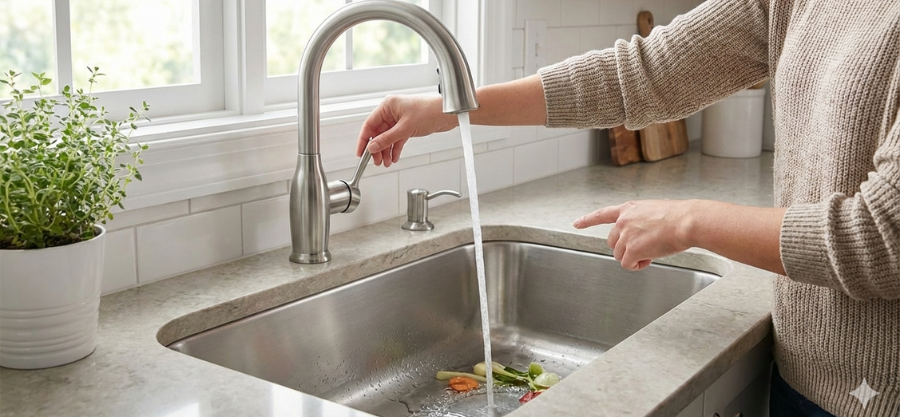
Cold water is essential for proper garbage disposal operation.
Why cold water works:
- Solidifies grease so it can be flushed away
- Prevents oils from coating internal parts
- Helps push food particles completely through the system
Best practice:
- Run cold water for 5–10 seconds before turning on the disposal
- Keep it running while grinding food
Continue running water for 15–20 seconds after turning it off
This single habit eliminates a huge percentage of odor problems.
Step 2: Clean with Ice Cubes and Citrus Peels
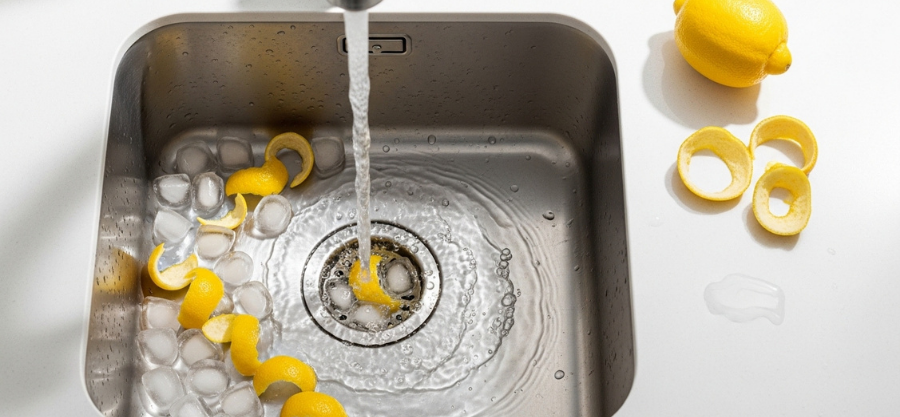
This is one of the simplest and most effective garbage disposal cleaning methods.
What it does:
- Ice scrapes buildup from grinding surfaces
- Citrus peels neutralize odors naturally
- Improves overall freshness instantly
How to do it:
- Add 1–2 cups of ice cubes
- Drop in lemon, lime, or orange peels
- Run cold water and turn on the disposal
This method is safe, fast, and highly effective for routine cleaning.
Step 3: Use Baking Soda and Vinegar for Deep Cleaning
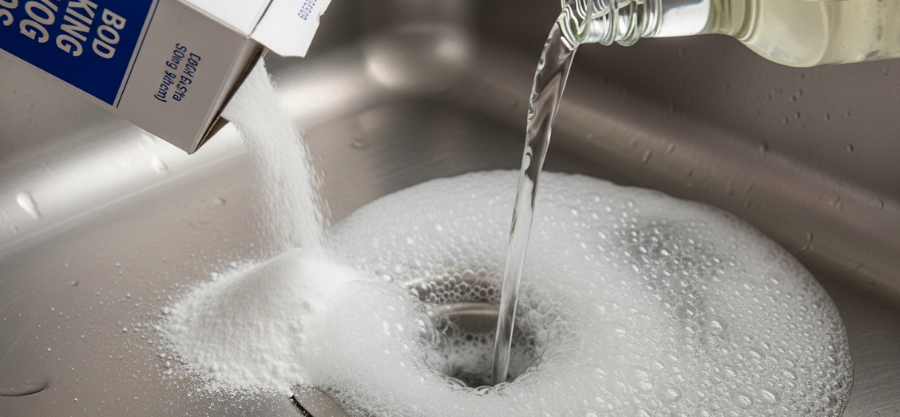
For persistent odors, this method targets bacteria and buildup deeper in the system.
Steps:
- Pour ½ cup baking soda into the disposal
- Add 1 cup white vinegar
- Let it fizz for 10–15 minutes
- Flush with hot water (not while grinding)
This combination breaks down residue without damaging your disposal.
Step 4: Clean the Rubber Splash Guard (Most People Skip This)
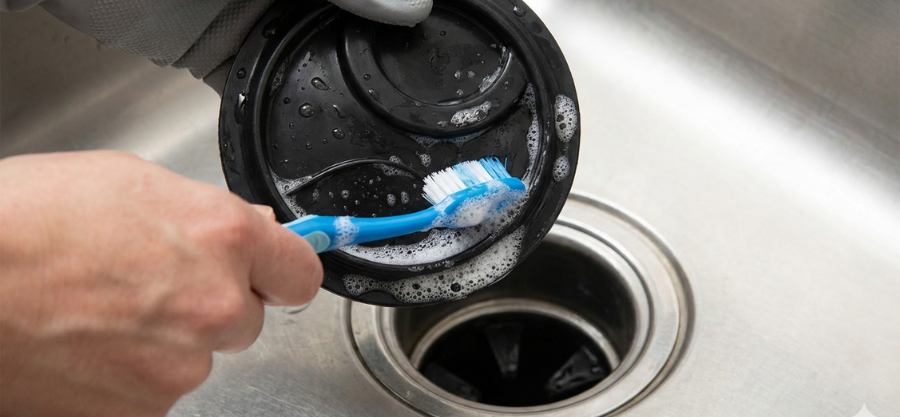
The rubber splash guard is one of the biggest hidden sources of garbage disposal odors.
Food particles stick underneath the flaps and rot—often unnoticed.
How to clean it properly:
- Turn off the disposal
- Lift the rubber flaps
- Scrub with dish soap and an old toothbrush
- Rinse thoroughly
Even if the disposal itself is clean, a dirty splash guard can make your kitchen smell.
Step 5: Avoid These Foods at All Costs
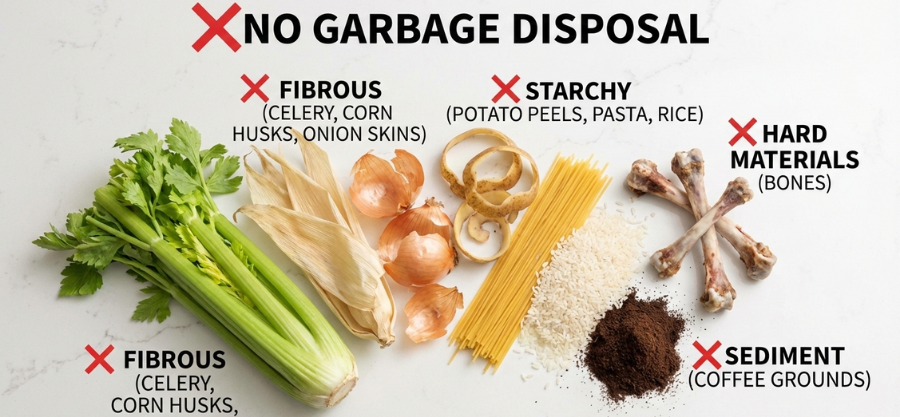
Fibrous and Starchy Foods
Avoid putting these down the disposal:
- Celery
- Corn husks
- Onion skins
- Potato peels
- Pasta, rice, bread
They wrap around components or expand and clog pipes.
Grease, Oil, and Fat
Grease solidifies inside pipes and traps odors. Always wipe greasy pans before washing.
Hard Items and Non-Food Waste
Never put these in your disposal:
- Bones
- Fruit pits
- Coffee grounds
- Plastic or paper
These cause jams, wear, and long-term damage.
Troubleshooting Persistent Garbage Disposal Smells
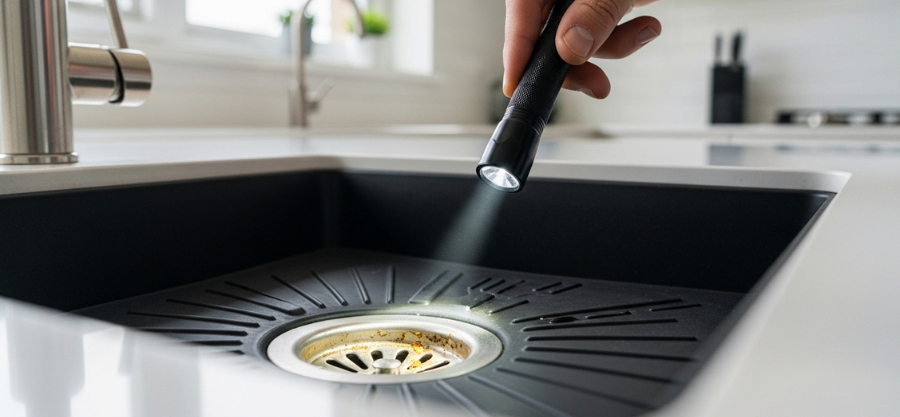
If odors won’t go away:
- Repeat baking soda and vinegar treatment
- Run hot water through connected drains
- Inspect splash guard for cracks or wear
- Check for slow drainage (a sign of buildup)
A worn splash guard is inexpensive to replace and often solves recurring odor issues instantly.
Long-Term Garbage Disposal Maintenance Best Practices
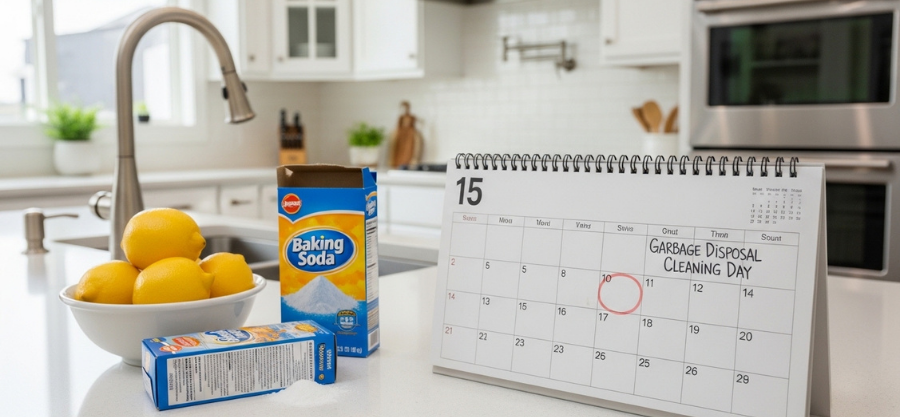
- Run the disposal regularly (even when it’s not full)
- Avoid overloading it
- Flush thoroughly after each use
- Clean monthly—even if there’s no odor
Consistent maintenance prevents costly repairs and keeps your kitchen fresh.
Final Thoughts: A Clean Disposal Means a Cleaner Kitchen
A garbage disposal doesn’t have to smell—and it doesn’t need harsh chemicals to stay clean. With the right habits and a simple maintenance routine, you can keep it running smoothly for years.
Clean it regularly, respect its limits, and your garbage disposal will stay exactly what it’s meant to be:
quiet, efficient, and odor-free.
